
Robotic Surgery Centre
Robotic Surgery Centre
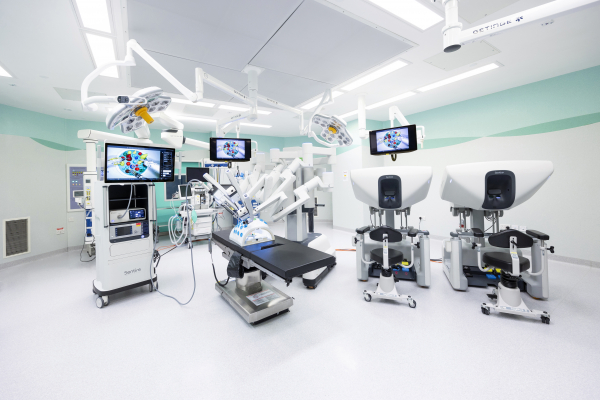
With the generous donation from Liu Yung Chau & Chen Yuan Rita Charity Foundation, CUHK Medical Centre has successfully introduced the locally developed Sentire® Surgical System, marking an important milestone in the hospital’s advancement of smart healthcare and minimally invasive surgery.
CUHK Medical Centre is the first hospital in Hong Kong to purchase the locally developed Sentire® Surgical System. Developed by Cornerstone Robotics, this surgical system is currently the most complex robotic-assisted surgical platform independently developed in Hong Kong. CUHK's Faculty of Medicine received the HKSAR Government’s InnoHK funding support and established the Multi-scale Medical Robotics Center in 2020. Since August 2022, CUHK Faculty of Medicine have been collaborating with Cornerstone Robotics to conduct clinical trials on the Sentire® Surgical System. The multidisciplinary trial were completed smoothly, providing important clinical data for the Sentire® Surgical System to be certified by the National Medical Products Administration.
As a private teaching hospital led by CUHK's Faculty of Medicine, CUHKMC actively introduces innovative technologies, and is committed to translating research into clinical practice, with an ultimate goal to enhancing patient experience, and realising our commitment of “CUHK Leads – Transforming Research into Care”.
What is Robotic Surgery?
At CUHKMC, every patient’s journey is our top priority. We take pride in advancing medical care through robotic surgical system, which is already making a significant impact in our operating rooms.
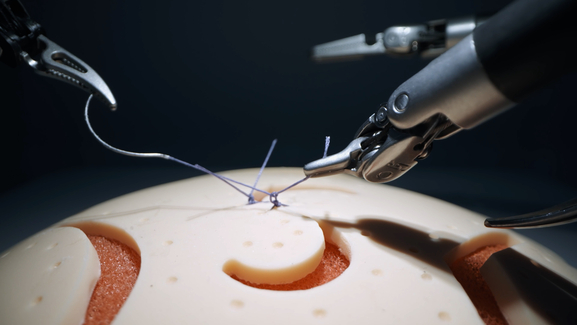
Robotic surgery is performed by a surgeon, with the assistance of a surgical robot that enhances their visual and operational capabilities to perform precise surgeries through very small incisions.
What Are the Benefits of Robotic Surgery?
- Reduced Blood Loss and Lower Risk of Complications
Robotic surgery enable more precise dissection and bleeding control, significantly reducing blood loss compared to traditional laparoscopic or open surgery. 1 - Faster Recovery and Shorter Hospital Stay
Smaller incisions and less tissue trauma help minimise postoperative pain, promote quicker recovery, and shorten hospital stays. 2 - Smaller, More Discreet Incisions
Minimally invasive incisions are less visible and offer improved aesthetic outcomes. 3 - Empowering Surgeons
Enhanced dexterity and intuitive controls enable precise, confident performance of complex procedures. - Sharper Vision
Advanced 3D imaging with anti-fog technology ensures clear visibility during delicate surgeries.
1. Zhou, Y., et al. (2023). Robot-assisted surgery in gynecologic oncology: Meta-analysis of blood loss, lymph-node yield, and complications. Oncology Letters.
2. 2. Wang, X., Li, Y., Zhang, H., et al. (2017). Robot-assisted laparoscopic versus open middle pancreatectomy: Short-term results of a randomized controlled trial. Surgical Endoscopy, 31(3), 1234–1242.
3. Mayo Clinic (2023). Robotic Surgery Overview.
What types of surgeries can the robotic system be used for?
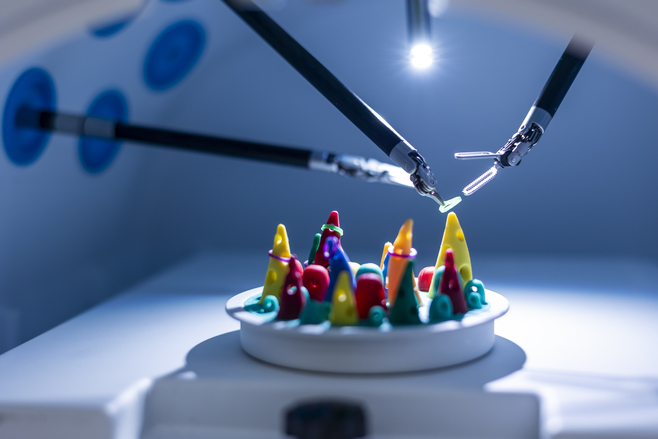
This robotic system can be applicable in:

General Surgery
This includes a variety of general surgical procedures such as hepato-biliary-pancreatic surgery, upper gastrointestinal surgery and colorectal surgery.

Urology
This includes a variety of urological cancer surgeries such as robotic prostatectomy, robotic cystectomy and robotic partial nephrectomy.
How Does the Robotic Surgery Work?
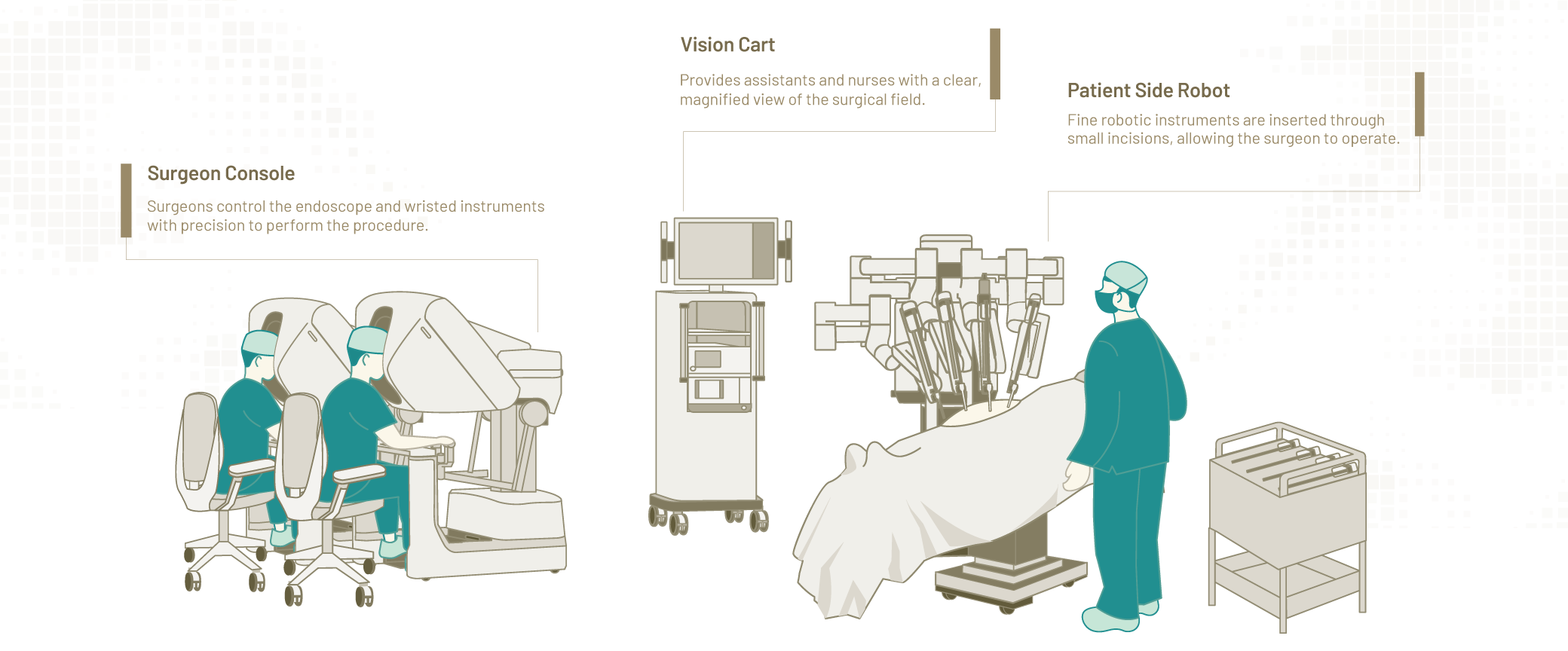
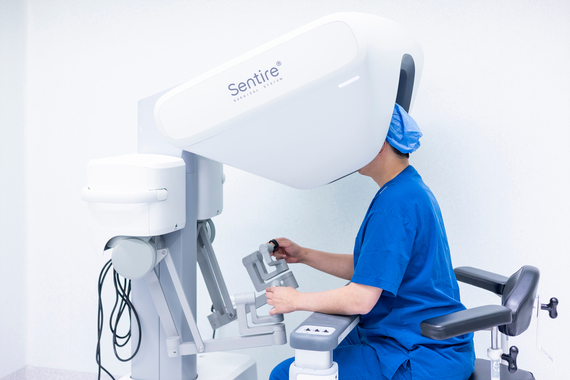
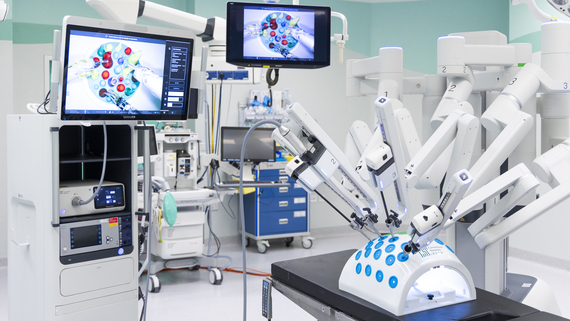
The robotic surgery is performed by trained surgeons using this innovative system. The procedure involves a few small incisions, each about the size of a fingertip. Throughout the surgery, the surgeon operates from a nearby console in the operating room, precisely controlling the fine endoscopic instruments to ensure the highest level of accuracy and precision.
Surgeon Console
| Vision Cart
| Patient Side Robot
|
FAQ
Robotic surgery is suitable for patients requiring complex surgical procedures where precision, minimal invasiveness, and faster recovery are priorities. This robotic system can be applicable in General Surgery and Urology, including procedures such as prostatectomy, cystectomy, nephrectomy, and resection of renal pelvis cancer.
Robotic surgery has undergone nearly 30 years of technological advancement, making the systems highly mature and reliable. Today, the technology is entering a new phase of precision development and is increasingly recognised for its safety and dependability in modern medicine. With a growing number of clinical cases, its safety has been widely validated and endorsed by experienced medical teams.
Every procedure is performed by a professional medical team that has undergone rigorous technical and clinical training, and passed relevant assessments. Under well-defined protocols, the team operates the surgical robot using high-definition, magnified visuals and stable, flexible instruments to ensure the procedure is carried out with precision and safety.
Incision size and invasiveness:
- Robotic surgery uses small incisions, reducing trauma to tissues, while open surgery requires large incisions to directly access organs. Less pain in robotic procedures.
Flexibility in small spaces:
- Robotic instruments feature multi-jointed wrists, allowing them to maneuver easily within confined or hard-to-reach areas, offering superior flexibility compared to the more rigid tools used in open surgery.
Suitability for complex cases:
- Open surgery remains preferred for very extensive or tactile-dependent procedures, whereas robotic surgery excels in minimally invasive, precision-demanding operations.
Precision and control:
- Robotic systems offer enhanced dexterity and 3D magnified vision, enabling precise, delicate movements. Open surgery depends on the surgeon’s direct manual skills with limited visualisation.
Recovery and postoperative outcomes:
- Robotic surgery generally results in less pain, minimal scarring, shorter hospital stays, and quicker recovery than open surgery.
Robot surgery is not performed autonomously by a robot. It is, in essence, a surgical procedure carried out by a trained surgeon. The robotic system serves as an advanced tool that enhances the surgeon’s precision, dexterity, and vision, allowing the operation to be performed through small incisions in the abdominal wall.
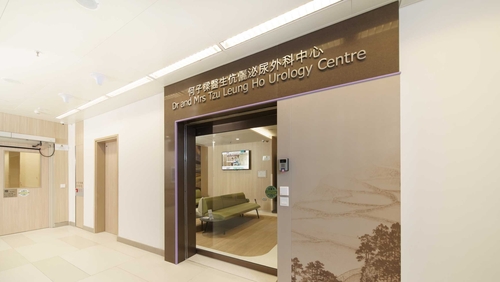
Each patient’s health condition is unique, so the suitability of robotic surgery may vary. We encourage you to consult your doctor to discuss your individual circumstances. If needed, you can also contact our Urology Centre or Specialist Outpatient Centre to schedule an appointment.
For details about the surgery package, please refer to https://www.cuhkmc.hk/medical-packages/cumc-medical-package/urology.
Contact Us
Urology Centre | Specialist Outpatient Centre |
|---|---|
Booking & Enquiries:
| Booking & Enquiries:
|
Service Hours
| Service Hours
|